Why Window Safety Checks are Critical for Glass Integrity and Fall Prevention
Updated: Sep 21
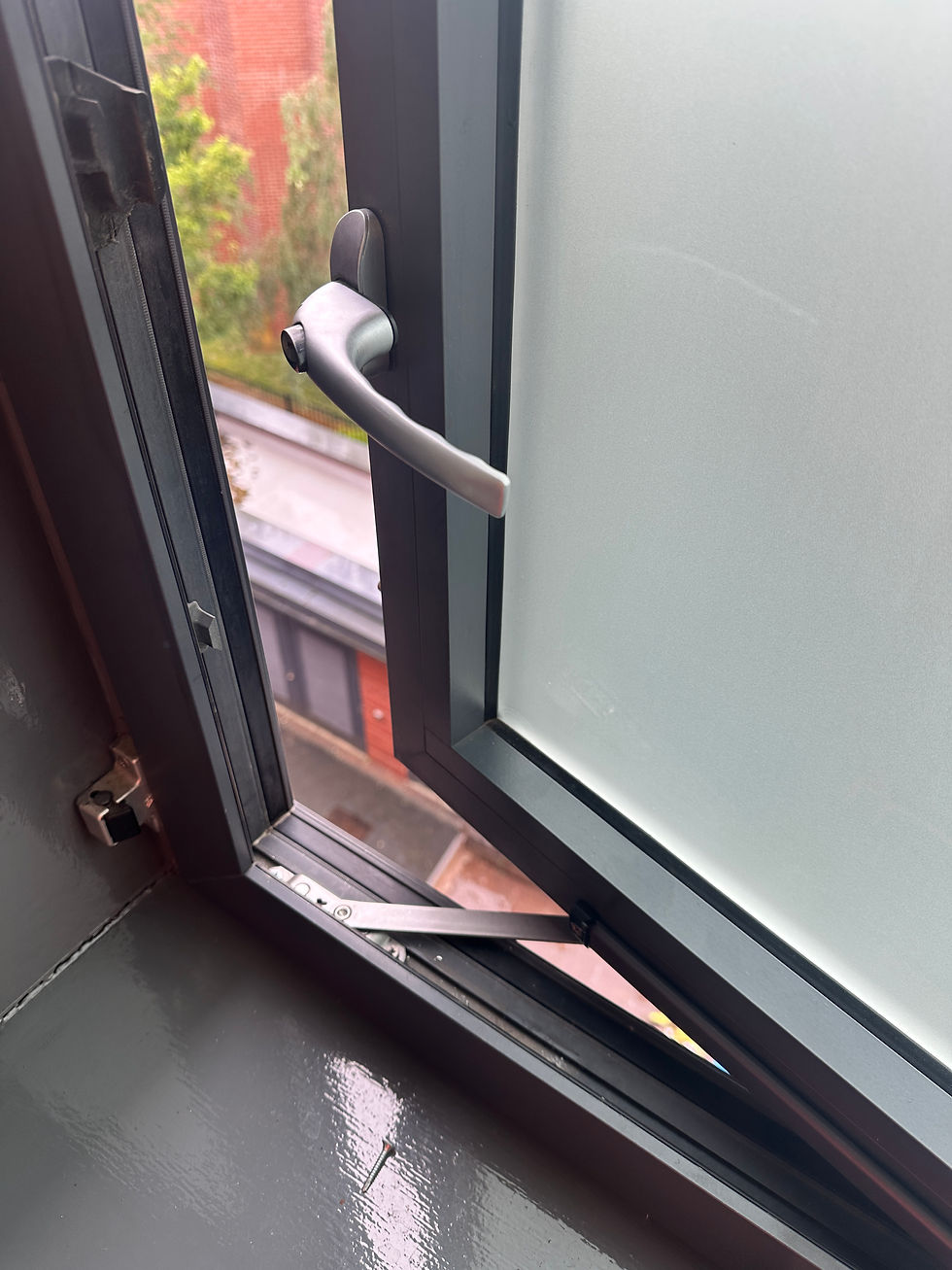
When walking through a home or commercial property, windows are often viewed simply as architectural features—bringing in natural light, fresh air, and views of the surrounding area. However, from a structural and building safety perspective, windows serve as essential protective barriers.
Over time, everyday use, building settlement, thermal expansion, and the unpredictable British weather can compromise a window's safety features. Regular window safety checks are not merely routine maintenance; they are a vital safeguard against two severe hazards: glass failure and accidental fall risks.
1. Preventing Fall Hazards: Protecting Vulnerable Occupants
Accidental falls from windows are among the most preventable yet devastating domestic accidents. Young children, elderly individuals, and pets face the highest risk, but faulty ironmongery or sudden structural failure can create a hazard for anyone.
Fly Screen Misconceptions
A common oversight during home safety checks is relying on insect or fly screens for fall protection. These screens are designed solely to keep insects out—they pop out easily under pressure and offer zero structural resistance to a child or adult leaning against them.
The Role of Safety Hardware
A thorough window inspection ensures that proper fall-prevention hardware is fitted and functioning correctly in line with UK safety standards:
Window Restrictors: Essential for upper floors, restrictors limit the initial window opening to less than 100 mm, preventing adults or children from falling through. In accordance with BS EN 14351-1 and UK Building Regulations (Part K), restrictors in domestic settings should require a deliberate, two-handed operation or a key to release, ensuring child safety while permitting emergency egress (such as escape during a fire).
Guarding & Safety Locks: Inspecting existing sash fasteners, cockspur handles, and multi-point locks ensures mechanisms haven't worn down or loosened over time.
Hinge and Friction Stay Integrity: On double-glazed casement windows, top and side friction hinges must be checked for corrosion, sheared rivets, or loose frame fixings that could cause the sash to detach or swing open unexpectedly under wind load.
2. Ensuring Glass Integrity: Toughened, Laminated, and Stress Cracks
Glass endures constant environmental stress, from damp winter chills to direct summer sun. These temperature fluctuations cause expansion and contraction, while subtle movement in the building fabric applies torsional force to window frames. Regular checks allow you to catch glass stress before catastrophic failure occurs.
Critical Safety Glazing Zones (Part N / BS 6262-4)
Under UK Building Regulations (Approved Document N and BS 6262-4), safety glass is legally required in "critical locations" where people are at risk of impact—such as low-level windows (where the glass sits within 800 mm of the finished floor level) and glass adjacent to doors:
Toughened Glass (Safety Glass): Heat-treated to be up to five times stronger than standard annealed float glass. If it breaks, it disintegrates into small, relatively harmless granular pieces rather than dangerous, jagged shards. An inspection confirms whether low-level panes carry the required Kitemark or BS EN 12150 stamp in the corner.
Laminated Glass: Formed of two glass sheets bonded by a plastic interlayer (PVB). If impacted, the broken pieces adhere to the interlayer, maintaining a solid barrier that prevents sharp shards from falling and stops anyone from falling through the opening.
Spotting Early Signs of Failure
During a window inspection, key visual indicators can signal impending glass failure:
Edge Chips and Nicks: Minor damage hidden beneath the bead or frame edge can concentrate stress, potentially leading to spontaneous shattering in toughened glass.
Thermal Stress Cracks: Straight cracks starting at a precise 90-degree angle from the frame edge indicate unequal thermal expansion across the double-glazed unit (DGU).
Frame Distortion & Failed Seals: Warped timber or bowing uPVC frames exert uneven pressure on the glass, lowering impact resistance and often causing misting or condensation between the panes.
3. Key Checklist for a UK Window Safety Inspection
To ensure your property complies with UK safety guidelines and protects occupants, perform a periodic check using this practical checklist:
Inspection Area | Check Point | Recommended Action |
Opening Limits | Windows above ground level opening wider than 100 mm | Retrofit BS EN compliant window restrictors |
Glass Condition | Cracks, misting between double glazing, or damaged edges | Replace the blown double-glazed unit or sash |
Ironmongery | Handles, friction stays, hinges, and friction screws | Tighten loose fixings, lubricate tracks, or replace worn hinges |
Critical Safety Zones | Glazing within 800 mm of the floor or adjacent to doors | Verify presence of BS EN safety glass markings (Toughened/Laminated) |
Room Layout | Furniture, beds, or radiators placed directly beneath windows | Move climbable items away from windows in children's bedrooms |
Safety is an Ongoing Commitment
Window safety is not a "fit and forget" aspect of property management. As ironmongery ages, seals degrade, and tenants or family needs change, the risks associated with glass failure and falls evolve. Integrating regular window safety checks into your home maintenance routine ensures building regulation compliance, protects your property value, and—most importantly—prevents serious injuries.
Comments